Was Ihre Git-Historie über Ihr Team verrät — und warum kaum jemand hinschaut
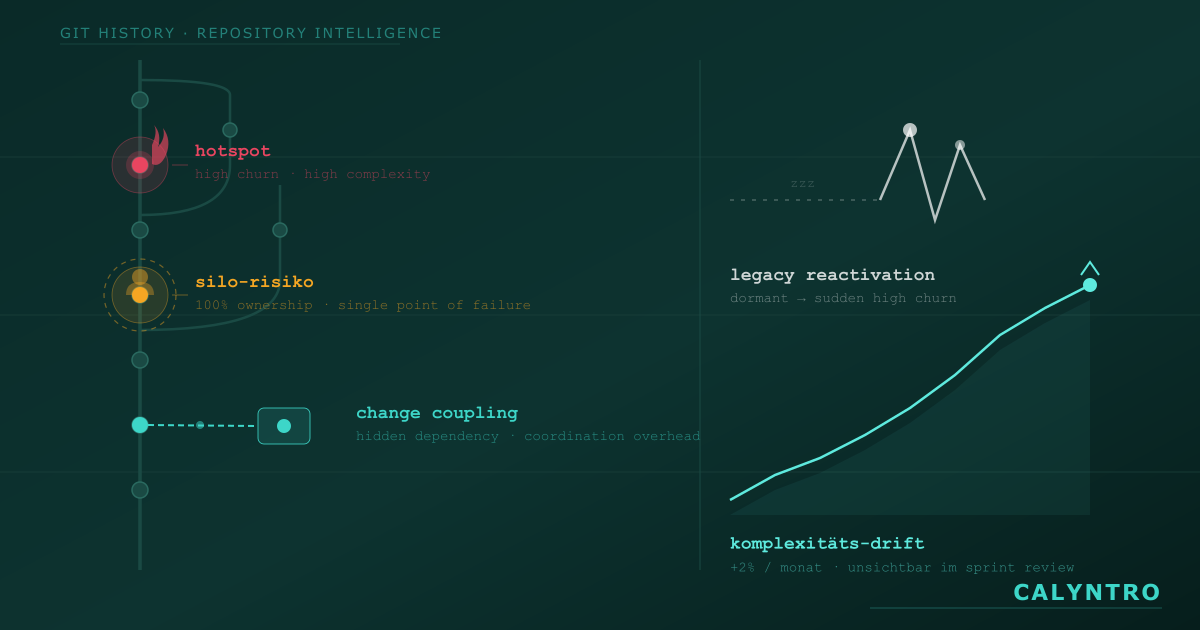
Ein Team plant eine größere Umstrukturierung. Drei Module sollen einem neuen Team übergeben werden, zwei weitere zusammengeführt. Der Engineering Manager ist zuversichtlich — die Architektur ist klar dokumentiert, die Übergabe sollte in zwei Sprints erledigt sein. Vier Monate später ist das Projekt noch nicht abgeschlossen. Was niemand vorher gesehen hatte: Eines der übergebenen Module hatte in den letzten 18 Monaten exklusiv einen einzigen Entwickler als Ansprechpartner — der inzwischen das Unternehmen verlassen hatte. Ein anderes Modulpaar änderte sich faktisch immer gemeinsam, obwohl im Architekturdiagramm keine Verbindung eingezeichnet war. Und ein dritter Bereich zeigte seit Monaten stetig steigende Komplexität — unbemerkt, weil niemand den Trend über Sprints hinweg verfolgt hatte. ...